
 (210) 610.2332
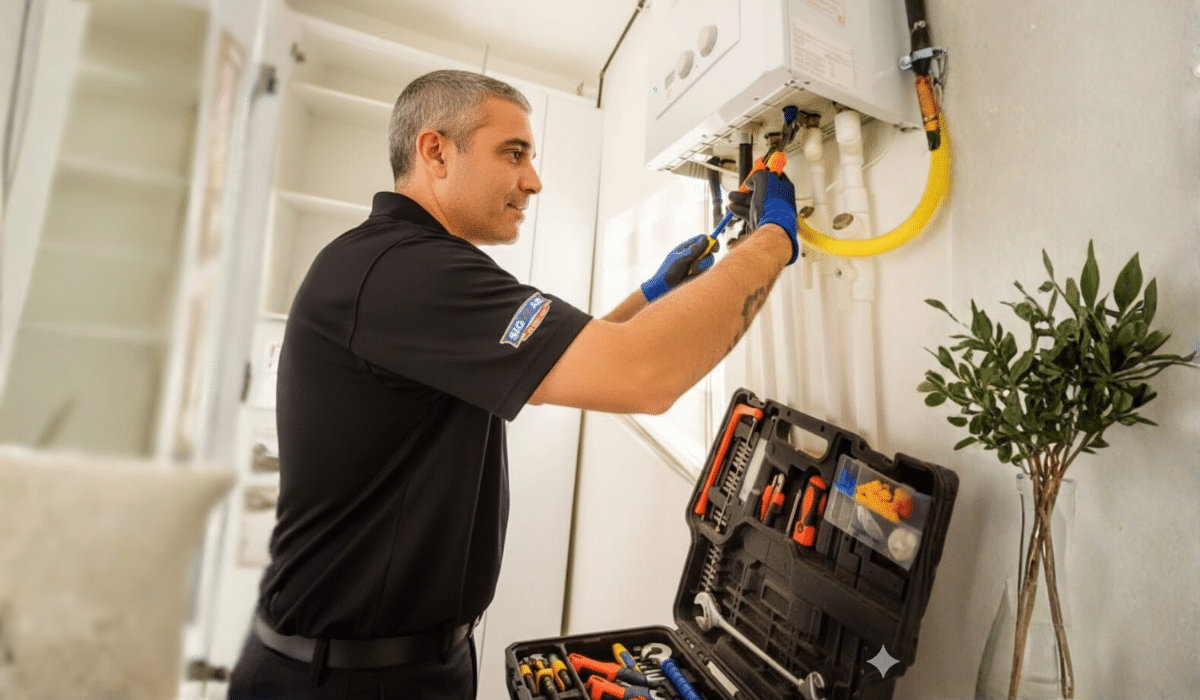
A leaking boiler is easy to overlook at first. A little water on the floor. A pressure gauge that keeps creeping up or dropping down. A slow drip that doesn’t seem urgent. But boilers don’t leak without a reason. When water escapes from the system, it usually indicates that something inside is wearing out, failing, or no longer sealed properly.
Left alone, that small leak can turn into bigger problems. Heating performance drops. Moisture begins damaging nearby surfaces. In some cases, the boiler shuts itself off to prevent further damage. That’s why the question comes up so often: What should I do if my boiler is leaking water?
Understanding the cause of a boiler leak and its severity helps homeowners act before minor issues escalate into costly repairs or a complete system failure.
What Should I Do if My Boiler Is Leaking Water?
Water dripping from a boiler is a sign you must not ignore. Starting with safety is essential. You should switch off the boiler and the water supply to your machine. The internal components and electronics of a modern boiler can be easily damaged by water.
It is common for homeowners to assume a loose connection is the cause of the leak. Sometimes it is, but most of the time leaks indicate something more profound. Leaking can have many causes, including pressure issues, corrosion, or worn parts, and you can’t fix any of these with a quick patch.
You can tell where the water is coming from, but you shouldn’t try to fix it yourself. Leaks can occur at valves, relief piping, or the boiler. Each source means something different. There are exceptions to when the boiler may be temporarily operated. Otherwise, it must be left off until a professional can review it.
What Are the Common Boiler Leak Problems?
Boilers leak for reasons that are not always obvious. Some problems develop slowly. Others appear suddenly after months of internal stress. Understanding common boiler leak problems helps homeowners avoid misdiagnosis.
-
Pressure Relief Valve Failure
The pressure relief valve prevents a dangerous pressure buildup in the boiler. A valve leak almost always indicates the valve was forced open by high pressure, not that it failed.
Most of the time, high pressure is caused by a defective expansion tank or incorrect system filling. It is absolutely out of the question to seal or cap a leaking relief valve. Removing the valve is equivalent to turning off the system’s safety valve, thereby increasing the risk of severe damage.
-
Expansion Tank Malfunction
The expansion tank absorbs pressure changes as water expands and contracts within the boiler. When the tank loses its air charge or develops internal corrosion, it can no longer regulate pressure. This causes repeated pressure spikes that force water out through valve fittings or weak points in the system.
Expansion tank failure is a leading cause of recurring boiler leaks and a clear sign that the system needs professional inspection.
-
Corroded Heat Exchanger
A heat exchanger transfers energy from the burner to the water in the heating system. Over time, exposure to heat, oxygen, and minerals in the water wears on the metal.
When corrosion begins, cracks develop and water leaks internally. The result is water pooling beneath the boiler; professional servicing and replacement are generally required.
-
Loose Pipe Connections and Fittings
Boiler piping expands and contracts during the heating cycle. This movement over time will loosen any threaded connections, solder joints, and union fittings.
Minor leaks may only appear when the boiler is in operation and can therefore be easily overlooked. If such leaks are not addressed, they will allow moisture to reach electrical components and insulation, leading to system failure.
-
Faulty Pump Seals
Circulator pumps circulate heated water through the system. When the pump seals are worn, water will begin to leak between the pump housing and the pump casing. These leaks tend to deteriorate rapidly due to the pump’s constant pressure in operation.
A faulty pump seal can cause inefficient circulation and, if left unreplaced, damage the motor.
-
Internal Tank Cracks
Older boiler models are more prone to internal tank cracking due to metal fatigue and long-term thermal stress. These cracks are often hidden and only become visible once significant leakage occurs. Internal tank leaks typically signal the end of the boiler’s service life and require complete system replacement rather than repair.
When an older unit has reached the end of its service life, professional boiler installation is often the most reliable way to restore safe, efficient heating and avoid repeated repair costs.
-
Condensate Line Issues
High-efficiency boilers produce condensate during regular operation. When the condensate drain line becomes clogged or improperly installed, water backs up and leaks from the unit.
While this issue is less severe than internal leaks, it still needs to be corrected to prevent corrosion, water damage, and operational shutdowns.
When Does the Boiler Require Urgent Help?
Some boiler problems are emergencies. Signs a boiler needs repair indicate the system should be shut down immediately, and a professional should be called without delay.
- Active water flow or rapid leak: If water is actively dripping, spraying, or pooling rapidly, the leak is major. Fast leaks indicate failing internal components or pressure loss and can damage floors, walls, and electrical systems within minutes.
- Water dripping on electrical components: Any water near your wiring, control boards, ignition systems, or pump motor is a problem. Electrical loss may be delayed as corrosion and shorts develop. Until the boiler is examined, it should not be restarted.
- Pressure relief valve releasing large amounts of water: A relief valve that opens forcefully or repeatedly indicates dangerous pressure buildup. This condition can damage the boiler or surrounding piping and pose a safety risk if left unaddressed.
- Sudden loss of system pressure: If boiler pressure drops rapidly to unsafe levels, the system cannot circulate heat properly. This often indicates a hidden internal leak or a failed component that requires immediate diagnosis.
- Boiler shuts down with error codes after leaking: Automatic shutdowns mean safety systems have detected a serious fault. Restarting the boiler without repairs can damage burners, sensors, or control boards and worsen the original problem.
- Hissing, banging, or boiling sounds with visible leaks: Loud or unusual noises combined with leaks suggest overheating, steam formation, or restricted flow. These conditions place extreme stress on the heat exchanger, potentially leading to sudden failure.
- Rust-colored water or metal flakes in the leak: Discolored water indicates internal corrosion. This shows that structural components are deteriorating. Continued operation can cause irreversible damage and sudden system collapse.
- Smell of burning, melting, or electrical odor: Any burning or electrical smell near a leaking boiler is an emergency. This may indicate overheating wires, failing motors, or short circuits caused by moisture exposure.
- Older boilers develop a first-time major leak: When an aging boiler suddenly begins leaking heavily, it often means the internal tank or heat exchanger is compromised. These failures escalate quickly and should never be ignored.
Urgent boiler issues are not situations to monitor or delay. Immediate professional boiler repair in San Antonio, TX, is essential to protect the home, prevent costly water damage, and avoid complete system failure.
Final Thoughts
Never disregard a leaking boiler. Leaks from the boiler indicate significant mechanical loads. Treating them early can prevent both system failure and property damage. Acting fast saves money and eliminates the need for emergency replacements!
For reliable service, accurate diagnostics, and long-term solutions, contact the expert HVAC Contractor in San Antonio, TX, Sigma Air Heating & Cooling. Our team delivers honest assessments, skilled repairs, and dependable results. Call today to schedule service and restore your heating system with confidence.