
 (210) 610.2332
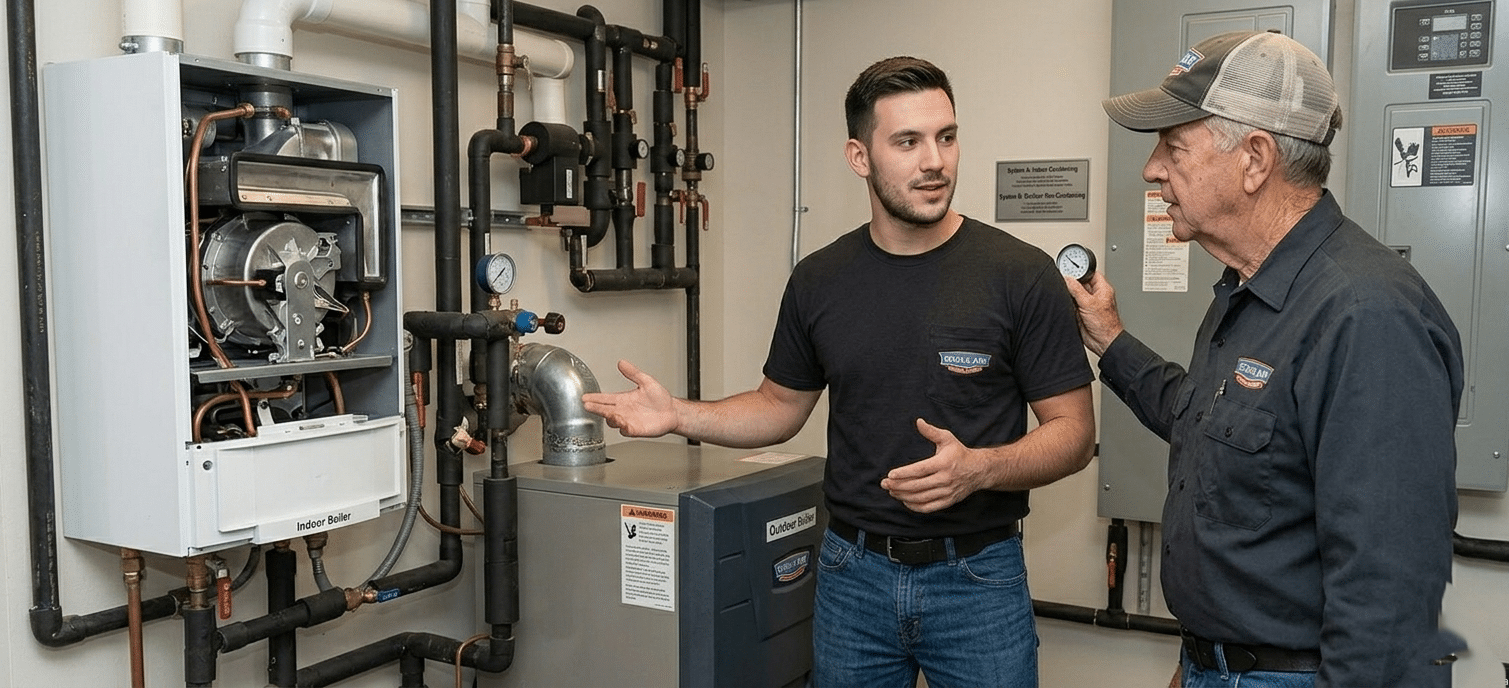
Choosing the right boiler for your home or business can be confusing, especially when deciding between indoor and outdoor boilers. Many homeowners face limited space, noise, and hard-to-reach maintenance areas. They also worry about long-term efficiency. Often, their heating system does not provide the comfort or cost savings they expected. But the question is, can a boiler be installed outside? Indoor boilers are installed inside a building, offering protection from the weather and typically being more efficient due to reduced heat loss. On the other hand, outdoor boilers save indoor space, reduce noise, and are easier to service. However, they can be more expensive to install and are exposed to the weather.
Understanding the key differences, pros and cons, and real‑world performance of each option can help you make a smarter, more economical heating choice that enhances comfort and boosts home value.
How Do Indoor and Outdoor Boilers Differ?
Determining the ideal boiler setup requires understanding how each type operates. Indoor models remain inside, shielded from environmental factors, which often improves efficiency and reliability. Outdoor units eliminate the need for indoor space and keep noise out of living areas, but they require weatherproofing and careful installation. By weighing these factors, homeowners can choose a solution that balances convenience, performance, and budget without compromising on comfort.
What Is an Indoor Boiler?
An indoor boiler is installed inside your home, usually in a basement, utility room, or another dry area. These boilers are protected from harsh weather, so they last longer and require less maintenance. When installing an indoor boiler, it’s crucial to understand where you shouldn’t place it. Avoid placing it in damp basements, cramped spaces, or poorly ventilated areas, as these conditions can lead to inefficiency and potential damage to the system. Since they are inside, they keep more heat, making them more efficient. Indoor boilers are also easier to monitor and service because everything is accessible inside your home.
What Is an Outdoor Boiler?
An outdoor boiler, also called a hydronic outdoor furnace, is installed outside your home or building. Many homeowners ask, “Are outdoor boilers worth it?” The answer largely depends on factors such as proper installation, weatherproofing, and the type of fuel used. It works just like an indoor boiler, heating your home and providing hot water.
Outdoor boilers are ideal when indoor space is limited or when you want to keep noise out of your living areas. They can use wood, pellets, or gas as fuel and connect to your home’s heating system through insulated pipes. The main challenge with outdoor boilers is protecting them from the weather, so proper insulation and maintenance are important for efficiency.
Key Differences Between Indoor and Outdoor Boilers
Here are the main differences between the two types of boilers:
| Features | Indoor Boilers | Outdoor Boilers |
| Location | Installed inside the house | Installed outside the house |
| Efficiency | Higher efficiency; retains more heat | Some heat loss may occur through pipes |
| Maintenance | Requires indoor access for servicing | Easier to service without entering the home |
| Noise | Generates noise inside the home | Keeps noise away from living spaces |
| Cost | Generally, lower installation cost | It can be more expensive due to piping and weatherproofing |
Installation: Indoor vs Outdoor Boilers
Indoor boilers are placed in dry, ventilated areas and connect directly to your heating system. Outdoor boilers require space outside, insulated piping, and must comply with local building codes. Certified professionals should install both to ensure safety and long-term performance.
Efficiency and Performance Comparison
Indoor boilers are usually more energy-efficient because they are protected from wind, rain, and cold temperatures. Outdoor boilers can still perform well, especially in larger homes or properties with limited indoor space. Proper insulation of the pipes that connect outdoor boilers to your home can greatly improve efficiency.
Maintenance and Service
Indoor boilers require regular inspection, cleaning, and servicing inside your home. Outdoor boilers are easier to access for service without disturbing your living space. However, outdoor boilers are exposed to the elements, so they need more attention to exterior parts and pipe insulation.
Cost Comparison
Indoor boilers are generally cheaper to install but take up indoor space. Outdoor boilers cost more upfront but free up indoor space, reduce indoor noise, and allow flexible fuel options like wood or pellets. The long-term costs depend on fuel, efficiency, and maintenance.
How to Choose the Right Boiler?
Choosing the right boiler depends on your home, space, budget, and climate. If you want to save indoor space or reduce noise, an outdoor boiler might be the best option. If you want maximum efficiency and protection from the weather, an indoor boiler is a strong choice. Either way, proper installation and maintenance will ensure your boiler keeps your home warm and efficient for years.
Conclusion
Indoor boilers are usually more efficient because they operate in a protected indoor environment, safe from the extreme weather you’d face with an outdoor unit. However, they take up significant indoor space and can generate noise, which may not be ideal for home installation.
For those who prefer not to have an indoor system, outdoor boilers are a great alternative. They can also burn wood or pellets, but require proper insulation to perform efficiently in varying weather conditions.
If you’re considering installing a boiler, professional guidance is essential to ensure a safe and effective solution. Sigma Air Heating & Cooling employs experienced technicians who prioritize safety, efficiency, and long-term performance.
Contact us today to find the best boiler solution for your home and enjoy reliable comfort for years to come.