
 (210) 610.2332
Leaking air ducts are one of the most common but often overlooked issues in home HVAC systems. When ducts have gaps, cracks, or loose connections, conditioned air escapes before reaching the rooms in your house. This not only makes it harder to maintain a comfortable indoor temperature but also increases energy bills and puts extra strain on your HVAC system. Many homeowners in warm regions notice uneven cooling, weak airflow, or rising utility costs without realizing that leaking ducts may be the root cause.
The good news is that sealing air ducts properly can significantly improve energy efficiency, indoor comfort, and system performance. Professional technicians use specialized tools and sealing materials to stop air loss and restore proper airflow. In this guide, you’ll learn how to seal leaking air ducts effectively just like a professional technician would.
Why Are Air Duct Leaks a Serious Problem?
Air ducts distribute heated or cooled air throughout your home. If these ducts are damaged or poorly sealed, a significant portion of conditioned air can escape into attics, crawl spaces, or walls.
Studies show that homes can lose 20–30% of conditioned air through leaking ducts. This air loss leads to several problems:
- Higher energy bills due to wasted air
- Reduced HVAC system lifespan
- Poor indoor comfort levels
When ducts leak, your HVAC system must work harder to compensate for the lost air. Over time, this extra strain can lead to expensive repairs or premature system failure.
Step-By-Step Guide to Sealing Air Ducts Like a Professional
Sealing air ducts properly requires a careful process to identify leaks and close them using the right materials. Professionals follow specific steps, such as inspecting the duct system, cleaning surfaces, and applying durable sealants to prevent air leakage.
Here’s a professional guide to safely and efficiently seal leaking air ducts.
1. Turn Off the HVAC System
Any work done with air duct systems requires the HVAC unit to be switched off first. Airflow and duct pressure, for example, provide greater safety and effectiveness for sealant application. It will also.
Power Down Before Sealing
- Avoid air pressure being sealed to push the sealant away from the gaps.
- Prevent injuries from HVAC internal moving parts.
- Allow gaps to seal materials to adhere properly.
2. Inspect the Entire Duct System
A complete inspection helps identify the exact locations where air is leaking. Professionals inspect every visible section of the ductwork for cracks, loose joints, or disconnected parts.
Duct Inspection Tips
- Look for loose duct joints or sections that are separated.
- Check seams, elbows, and connection points.
- Use a flashlight to spot small holes or gaps.
3. Clean the Duct Surface
Before applying any sealant, the duct surface must be clean and dry. Dirt, dust, or grease can prevent sealing materials from sticking properly.
Surface Prep Tips
- Wipe the area with a clean cloth.
- Remove dust, insulation, or debris.
- Ensure the surface is dry before sealing.
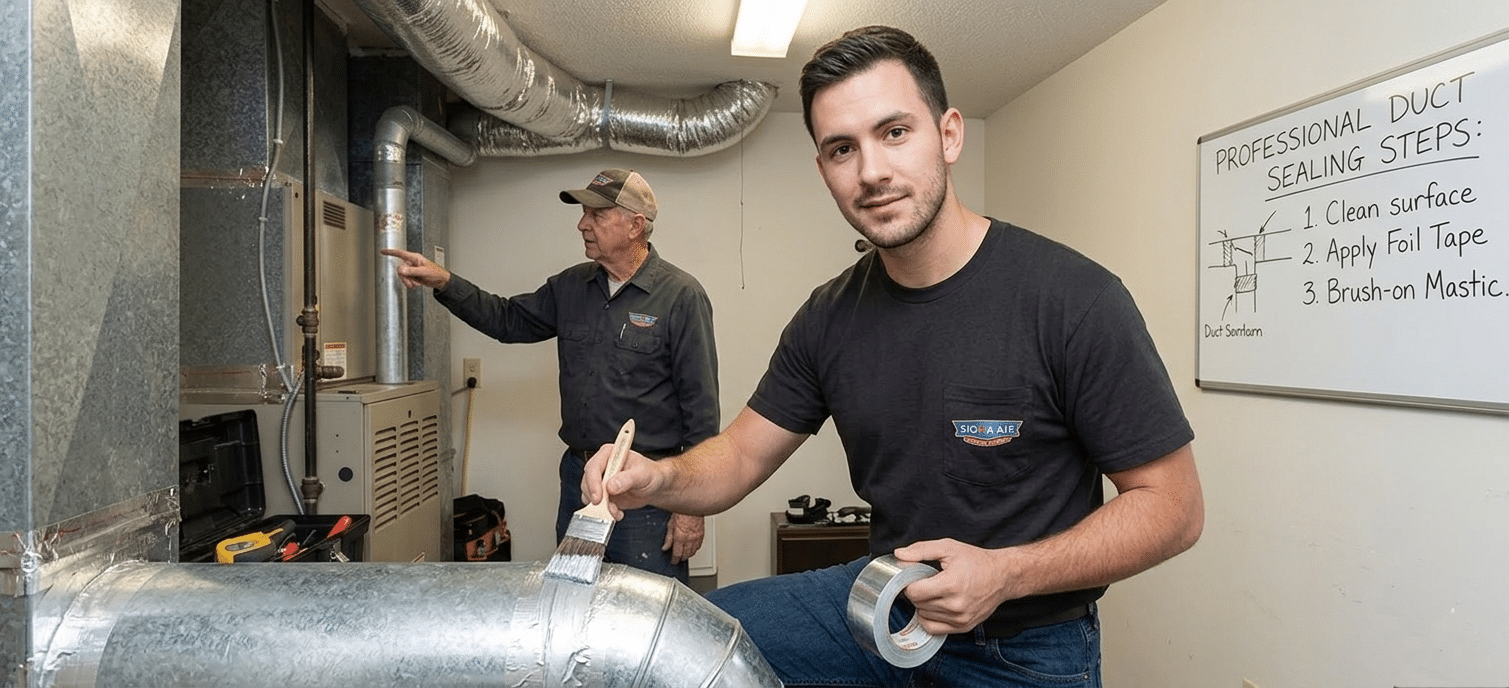
4. Seal Gaps with Mastic Sealant
Proper sealing of AC ductwork is essential to prevent energy loss and maintain even temperatures. Mastic sealant is one of the most reliable materials used by HVAC professionals. It is thick and flexible, allowing it to seal gaps and cracks effectively.
Duct Sealing Tips
- Apply mastic directly over the gap or seam.
- Spread it evenly using a brush or gloved hand.
- Cover the entire leak area completely.
5. Reinforce with Foil HVAC Tape
After applying mastic, professionals often add foil HVAC tape for extra protection. This tape strengthens the seal and prevents leaks from returning.
Tape Duct Joints
- Place foil tape over joints and seams.
- Press firmly to ensure a tight seal.
- Avoid using regular duct tape, as it wears out quickly.
6. Tighten Loose Duct Connections
Many duct professionals often circumvent the potential of air leaks to hold loose ducts together. Instead of just sealing up loose ducts, professionals will reinforce them to keep them together.
Secure Loose Ducts
- Use metal screws to tighten the duct joints.
- Ensure disconnected pieces are correctly positioned.
- Use a combination of mastic and foil tape to seal the connection.
7. Seal Around Air Vents and Registers
Air leaks are also present at the connections between the vents and the walls/ceilings. Sealing these positions will prevent any conditioned air from leaving the space before it is used.
Prevent Air Leaks at Vents
- Caulk the perimeter of the vents.
- Seal gaps with foam.
- Good Vent Frame.
8. Test the System
When the HVAC system is turned on again after all leaks have been sealed, the final step in testing the duct sealing will be measuring airflow.
Check Duct Performance
- Check how much air each vent is releasing.
- Make sure each room’s cooling or heating is balanced.
- Pay attention to any whistling noises, as they may indicate leaks.
Tools and Materials for Professionals Use
Professional HVAC technicians rely on specialized tools and sealing materials to effectively fix duct leaks.
Common Tools Include:
Sealing and maintaining ductwork require specialized tools to ensure effective, durable repairs. Using the right equipment helps improve system efficiency and prevent air leaks over time.
- HVAC foil tape
- Mastic duct sealant
- Paintbrush or applicator
- Metal screws
- Utility knife
- Flashlight
- Protective gloves
Unlike regular duct tape, foil tape, and mastic sealant are designed to withstand temperature changes and provide long-lasting seals.
Conclusion
The difference that properly sealed air ducts can make to your home’s comfort and energy efficiency is significant. Sealing leaks in your air ducts helps keep conditioned air where it belongs and improves your system’s airflow. The better your ducts are sealed, the less energy you waste, your bills are lower, and your home’s temperatures are better. It’s no wonder people ask, “Is duct sealing worth it?” Most of the time, it is, especially in places where air conditioners run a lot.
San Antonio homeowners looking into duct sealing: the air duct sealing professionals at Sigma Air Heating & Cooling will make sure all leaks are found and sealed properly. Our staff is equipped to deliver the highest-quality duct sealing in San Antonio, TX, and the longest-lasting sealing solution, using the best available sealing materials and techniques. Our team is dedicated to providing excellent customer service and helping your HVAC system work fire & ice to keep your house cozy year-round.
Schedule your service with the most trusted partner and keep your HVAC system up to date.